


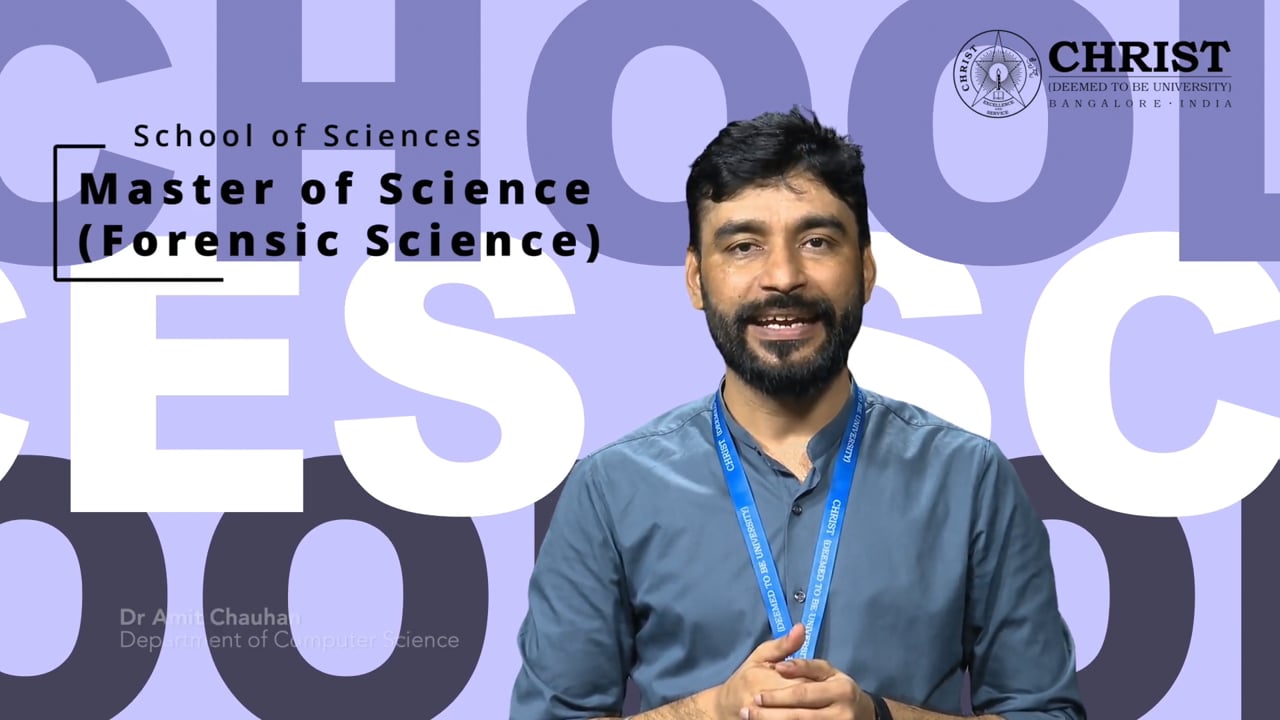
About the Programme
M.Sc., Forensic science program is a multidisciplinary field that involves the application of scientific principles and techniques to investigate and solve crimes. It encompasses a wide range of scientific and technical disciplines to gather and analyse evidence from crime scenes. Forensic science plays a crucial role in the criminal justice system, helping to solve crimes, establish the guilt or innocence of individuals, and ensure the fair and just administration of the law. It also has applications in other fields, including disaster victim identification, accident reconstruction, and historical research. Forensic science plays a critical role in the criminal justice system, helping to solve crimes, identify suspects, exonerate the innocent, and ensure that justice is served. It combines the principles of various scientific disciplines with investigative techniques to provide objective, scientifically-based information for legal proceedings. The graduates of forensic science would be able to establish facts and support legal investigations by providing unbiased and reliable scientific analysis.
Advanced Scientific Investigation and Analysis
The programme provides specialized knowledge in forensic biology, forensic chemistry, toxicology, cyber forensics, and criminal investigation.
Hands-On Training in Modern Forensic Techniques
Students gain practical expertise through crime scene analysis, forensic instrumentation, and case-based laboratory training
Technology-Integrated Forensic Education
The curriculum incorporates advanced analytical technologies and emerging forensic methodologies used in modern investigations
Professional Preparation for Forensic Careers
The programme prepares students for careers in forensic laboratories, investigative agencies, research organizations, and higher studies
Why Choose This Programme?
Crime Scene Investigation
The programme provides practical expertise in systematic crime scene examination, evidence collection, and forensic documentation techniques.
Evidence Analysis
Students develop advanced analytical skills to examine biological, chemical, physical, and trace evidence using modern forensic methods.
Expert Testimony
The curriculum prepares students to interpret forensic findings and present scientific evidence effectively in legal and investigative settings.
Digital Forensics
Students gain specialized knowledge in cybercrime investigation, digital evidence recovery, and forensic analysis of electronic devices.
Forensic Pathology
The programme offers insights into medico-legal investigations, causes of death analysis, and the scientific study of injuries and diseases.
Forensic Anthropology
Students learn techniques for human skeletal identification, age estimation, and anthropological analysis in forensic investigations.
Choose Your Track
Develops professional skills in evidence collection, preservation, and forensic documentation
Enhances analytical skills in detecting drugs, poisons, and toxic substances
Builds competency in digital evidence analysis, cybercrime investigation, and forensic computing tools
What You Will Learn
Programme Structure
The programme structure outlines the academic curriculum designed to provide a systematic progression of learning through core subjects, electives, and practical components across semesters, ensuring both theoretical understanding and skill development.
Semester 1 — Semester 1
Semester 2 — Semester 2
Semester 3 — Semester 3
Semester 4 — Semester 4
Eligibility & Fee Structure
Career Paths
Your Career Roadmap
Select a specialisation track to explore the learning journey and career outcomes tailored to your chosen domain.
Year 1 – Foundation in Crime Scene Investigation
Students develop fundamental knowledge and practical skills in crime scene examination, evidence collection, preservation, and forensic documentation.
Year 2 – Advanced Evidence Analysis and Investigative Applications
Students gain specialized training in forensic case reconstruction, advanced evidence management, and professional investigative procedures.
Year 1 – Foundation in Toxicology and Analytical Chemistry
Students acquire knowledge in toxic substances, forensic chemistry, analytical instrumentation, and laboratory safety practices.
Year 2 – Advanced Toxicological Investigation and Chemical Analysis
Students develop expertise in toxicological screening, drug analysis, chemical evidence examination, and forensic laboratory research.
Year 1 – Foundation in Cybercrime and Digital Evidence
Students build fundamental understanding of cybercrime investigation, digital systems, and methods of electronic evidence collection.
Year 2 – Advanced Digital Investigation and Cyber Forensic Applications
Students gain specialized skills in digital evidence recovery, network forensics, cyber security analysis, and forensic reporting techniques.
Message from the HOD

Bangalore Central Campus
The Department of Life Sciences is a unique department in the CHRIST (Deemed to be University) where interdisciplinary teaching and research in Life sciences have established permanent roots. It is a diverse discipline that covers all branches of Biotechnology, Botany, Zoology and Forensic Science in a dominant manner.
The Department of Life Science is one of the oldest Departments in the University, started from the inception of the institution in 1969. The Department has extremely competent faculty actively involved in advanced re
Message from the HOD
The Department of Life Sciences is a unique department in the CHRIST (Deemed to be University) where interdisciplinary teaching and research in Life sciences have established permanent roots. It is a diverse discipline that covers all branches of Biotechnology, Botany, Zoology and Forensic Science in a dominant manner.
The Department of Life Science is one of the oldest Departments in the University, started from the inception of the institution in 1969. The Department has extremely competent faculty actively involved in advanced research covering Bioprocess technology, Plant Biotechnology, Microbial Biotechnology, Environmental Biotechnology, Aquaculture, Wildlife biology, Animal Behaviour, Forensic Anthropology, Question Documents, Forensic Psychology, Forensic Ballistics etc.
The academic programmes have been highly ranked by reputed external agencies and have wide public acceptance. We, at the Department of Life sciences, constantly strive to enrich our syllabus and programs to remain at the forefront of current trends in higher education.
All the courses in each of the programmes have been carefully designed to equip the students for competitive exams like JAM, GATE, CSIR NET, SET etc. and also to write research proposals for grants. I invite you to explore our Department website to cognize the academic and research excellence of the Department. With this message, I would like to wish the student community a very successful experience together with us in the Department.
Admission Process
- Register with your Email ID
- Login to the Admission Portal
- Fill the Application Form
- Pay Application Fee
- Entrance Test (If Applicable)
- Assessment
- Interview
- Check login page for result
- If selected, Offer Letter attached
- Pay Course Fee Online
- Complete Admission Process
Ready to Apply?
Applications are open. Deadline: 2026-12-06 23:45:00.