


About the Programme
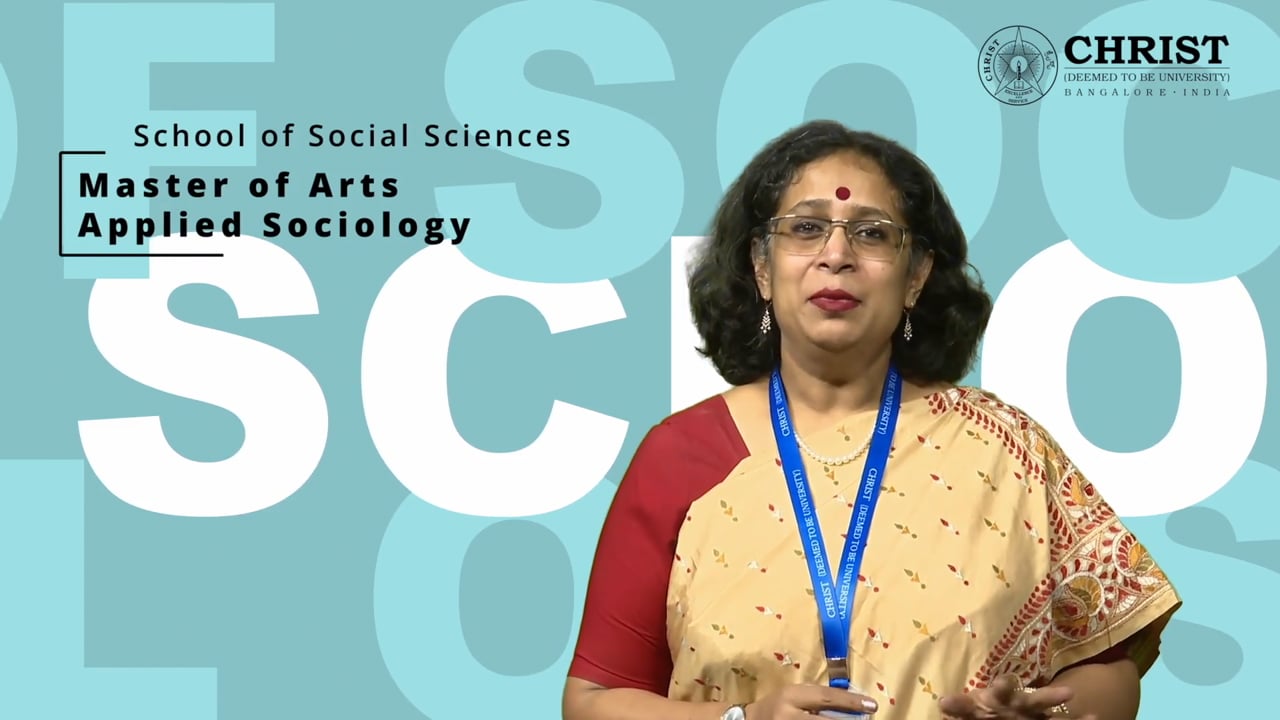
A Master's in Sociology program is a post graduate-level academic program that offers an in-depth exploration of the field of sociology. This program is designed to provide students with advanced knowledge and research skills in the study of human societies and social behavior. Master's in Sociology programs typically begin with a core curriculum that covers fundamental topics in sociology, including sociological theory, research methods, and data analysis. These courses lay the foundation for more specialized study. A lot of seminars are conducted throughout the course of the programme which allows the students to engage in in-depth discussions and critical analysis of sociological issues. These courses often involve the presentation of research findings and active participation in scholarly debates. Students typically gain expertise in both quantitative and qualitative research methods.They learn how to collect and analyze data to better understand complex social phenomena.
The program often includes career development components, helping students to refine their research, writing, and presentation skills, as well as to prepare for careers in academia, government, non-profit organizations, or private sector industries. A Master's in Sociology equips graduates with the critical thinking, research, and analytical skills needed for various careers in fields like social research, policy analysis, academia, and more. It's an ideal choice for those who are passionate about understanding and addressing the complex social issues of our time. Not just core sociology related papers are being taught but also different disciplines are introduced to students where they can contribute their knowledge such as Public relations, Sociology of health, Corporate sociology, sociology of media and many others. Hence, students can gain a holistic understanding of the different areas where sociology has a larger role to play.
Industry-Ready Curriculum
The programme is designed to bridge academic learning with professional practice by integrating contemporary social issues, applied research, field engagement, internships, and skill-based learning. It prepares students to respond effectively to evolving societal and workplace demands.
Emphasis on Critical and Analytical Skills
The programme promotes critical inquiry and analytical thinking through research-based learning, discussions, case studies, and field experiences. Students are trained to critically evaluate social phenomena and develop evidence-based perspectives and solutions
Skill Enhancement and Professional Development
The programme integrates training in communication, academic writing, presentation, leadership, and analytical skills to enhance students’ professional competencies and employability.
Social Innovation, Community Engagement and Social Responsibility
The programme encourages students to critically engage with contemporary social challenges through community-based learning and innovative problem-solving approaches. By integrating evidence-based practices with active social participation, students develop socially responsible perspectives and meaningful intervention strategies.
Why Choose This Programme?
Interdisciplinary and Contemporary Curriculum
The programme integrates classical sociological foundations with emerging areas such as digital society, health, sustainability, public policy, and social transformation, enabling students to understand contemporary social realities.
Experiential Learning through Field Engagement
Students gain hands-on exposure through field visits, community engagement, case studies, and applied learning experiences that connect classroom concepts with real-world contexts.
Internship and Professional Exposure
Structured internship opportunities with NGOs, research organizations, policy institutions, corporate sectors, and development agencies provide practical experience and professional networking opportunities.
Research and Analytical Skill Development
The programme emphasizes qualitative and quantitative research methods, data analysis, academic writing, and critical thinking skills essential for research and evidence-based practice.
Career-Oriented Learning Pathways
Students develop competencies relevant for diverse career opportunities in research, development practice, public policy, media, CSR, social entrepreneurship, and higher education.
Dissertation and Capstone Project Experience
The programme culminates in an independent research project or dissertation, allowing students to investigate contemporary social issues and strengthen their academic and professional portfolios.
Choose Your Track
What You Will Learn
Programme Structure
The programme structure outlines the academic curriculum designed to provide a systematic progression of learning through core subjects, electives, and practical components across semesters, ensuring both theoretical understanding and skill development.
Semester 1 — Advanced Quantitative Research Methods
Semester 2 — Human Resource Management
Semester 3 — Internship
Semester 4 — Sociology of Media LCA
Eligibility & Fee Structure
Career Paths
Your Career Roadmap
Select a specialisation track to explore the learning journey and career outcomes tailored to your chosen domain.
Classical and contemporary sociological theories, Advanced quantitative and qualitative research methods, Social policy and gender studies, Research design and analytical frameworks
Social psychology and demography, Sociology of health, media, and diaspora, Dissertation and applied research projects, Data interpretation and policy-oriented analysis
Industry orientation workshops, Skill development in communication and project management, Exposure to organizational and development sectors, Applied classroom activities
Internship with NGOs, CSR divisions, research organizations, media agencies, or policy institutions, Practical project experience, Professional networking opportunities, Industry engagement activities
Community engagement activities, Field-based assignments, Case study analysis, Understanding social realities and institutions
Field research and data collection, Social welfare administration practice, Community-based interventions, Dissertation with field orientation
Social policy frameworks, Governance and public institutions, Analytical and critical thinking skills, Policy foundations and evaluation methods
Human rights and law, Media and political processes, Applied policy analysis through projects and dissertation, Policy implementation perspectives
Message from the HOD
Bangalore Central Campus
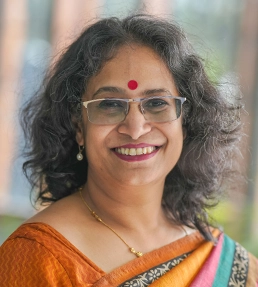
Our mission is to nurture our students to enable them to become responsible citizens with a global perspective through critical academic and field engagements. This enables them to inculcate 21st-century skills and contribute towards social change and sustainable development. This mission is of utmost importance today as we work with learners in an increasingly volatile, uncertain, complex, and unpredictable environment.
The discipline of Sociology provides critical insights into social dynamics, the structures underlying social injustices, promotes social change, informs policy and practice, enhances well-being, and tackles global challenges. Sociology provides valuable perspectives, knowledge, and skills to navigate and address t
Message from the HOD
Our mission is to nurture our students to enable them to become responsible citizens with a global perspective through critical academic and field engagements. This enables them to inculcate 21st-century skills and contribute towards social change and sustainable development. This mission is of utmost importance today as we work with learners in an increasingly volatile, uncertain, complex, and unpredictable environment.
The discipline of Sociology provides critical insights into social dynamics, the structures underlying social injustices, promotes social change, informs policy and practice, enhances well-being, and tackles global challenges. Sociology provides valuable perspectives, knowledge, and skills to navigate and address the complex social challenges of our time, to nurture learners who can work towards building a more equitable and inclusive society for all.
The Department offers multidisciplinary undergraduate programmes and a postgraduate programme in Applied Sociology. We also offer a Doctoral programme in Sociology. We focus on holistic learning, and the teaching and learning strategies used reflect this focus. Our students engage with experiential learning and benefit from our numerous collaborations with educational institutions worldwide, as well as our associations with the Government and Non-government organisations. This has contributed to the development of a dynamic alumni body committed to the betterment of the department, institution, and the organisations and communities they work with while reinforcing the relevance of the discipline in the world today.
Our highly qualified, experienced, and committed faculty members at the Bangalore Central Campus have a strong passion for teaching and research and contribute to the overall academic community. Our department is committed to providing the highest standard of academic excellence, even as we pursue the larger goal of whole-person education and nurture future citizens who are socially sensitive, aware, and responsible.
Admission Process
- Register with your Email ID
- Login to the Admission Portal
- Fill the Application Form
- Pay Application Fee
- Entrance Test (If Applicable)
- Assessment
- Interview
- Check login page for result
- If selected, Offer Letter attached
- Pay Course Fee Online
- Complete Admission Process
Ready to Apply?
Applications are open. Deadline: 2026-12-06 23:45:00.