


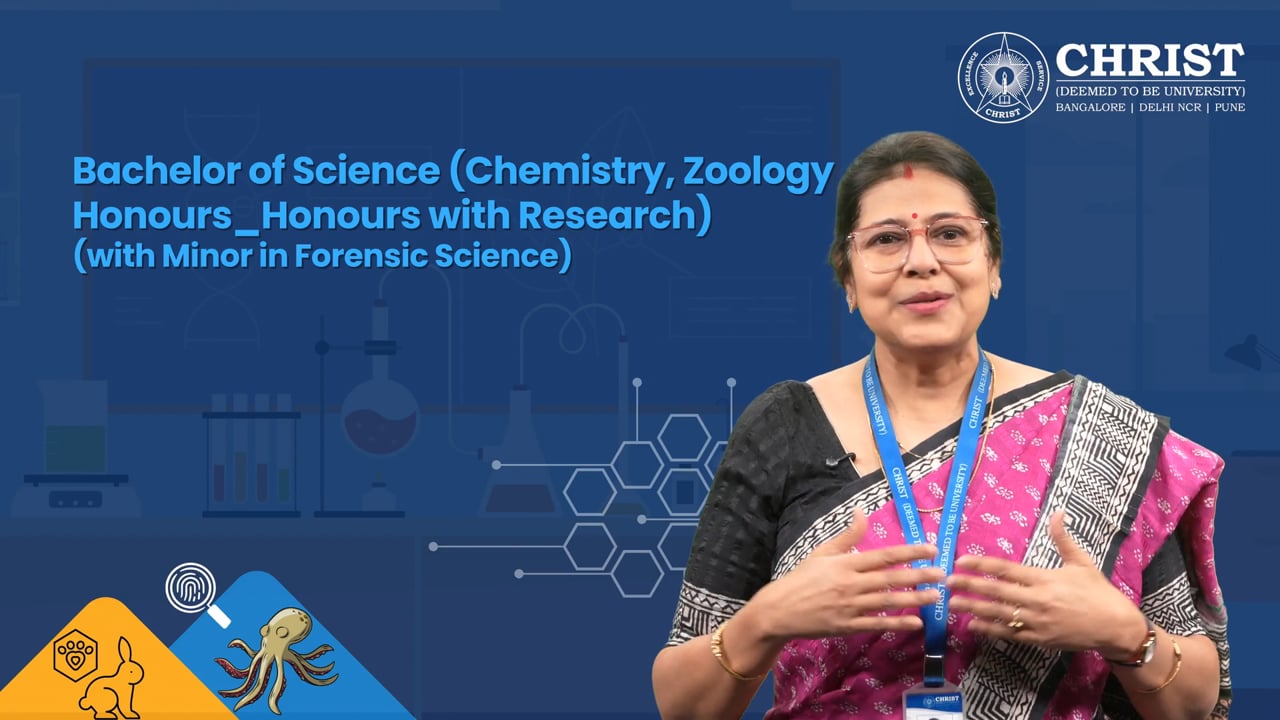
About the Programme
The Chemistry and Zoology Bachelor of Science program with a Minor in Forensic Science offers a robust blend of fundamental science and application-oriented learning. It integrates core concepts of chemical sciences and animal biology with the analytical rigor of forensic investigation, ensuring that students develop a strong conceptual foundation alongside practical laboratory competence. Emphasizing hands-on training, the curriculum nurtures skills in qualitative and quantitative analysis, microscopy, toxicology, ecology, and physiology, preparing students to address real-world scientific and investigative challenges.
Specialized Zoology and Chemistry courses are complemented by focused Forensic Science modules, enabling students to understand how scientific principles are applied in crime scene examination, evidence collection, and laboratory analysis. This interdisciplinary structure equips graduates with competencies relevant to emerging opportunities in forensic laboratories, environmental agencies, wildlife conservation, pharmaceuticals, and diagnostic laboratories. Through guided projects, case-based learning, and experimental work, students gain proficiency in techniques such as forensic chemistry, DNA analysis, and trace evidence evaluation, effectively bridging classroom learning with professional practice.
The program recognizes the growing societal and legal importance of scientific evidence, highlighting the synergy between chemical analysis, zoological knowledge, and forensic applications. By emphasizing ethical responsibility, scientific integrity, and sustainability, it prepares students to contribute responsibly to criminal justice, biodiversity conservation, and public health. Graduates are thus well-positioned for higher studies in Chemistry, Zoology, or Forensic Science, as well as for careers that demand analytical thinking, meticulous observation, and interdisciplinary problem-solving.
Interdisciplinary Double Major Structure
The programme uniquely integrates Chemistry and Zoology (Minor Forensic), enabling students to build strong foundations in both chemical and life sciences with equal emphasis on theory and practical learning.
Strong Laboratory and Research Exposure
Students receive extensive hands-on training through laboratory courses, experimental learning, research methodology, dissertation projects, and scientific investigations from the early semesters onwards.
NEP-Based Flexible Curriculum with Honours/Research Option
The programme follows the NEP framework with options for Honours and Honours with Research, interdisciplinary electives, minors, skill enhancement courses, and research-oriented academic pathways.
Excellent Progression Opportunities in Research and Industry
Graduates are well prepared for MSc programmes, research careers, biotechnology and pharmaceutical industries, wildlife biology, forensic sciences, environmental sectors, and competitive examinations.
Why Choose This Programme?
Interdisciplinary Learning
The programme combines Finance, Accounting, Analytics, Economics, and Technology to provide a holistic understanding of modern business environments.
Industry-Relevant Skill Development
Students develop practical skills in Financial Modelling, Data Analytics, Business Intelligence, Python, Power BI, and FinTech applications.
Industry-Relevant Skill Development
Aligns learning with real-world applications in pharmaceuticals, clinical research, environmental studies, and forensic investigation.
Career-Focused Curriculum
The curriculum is aligned with evolving industry demands and prepares students for careers in Finance, Analytics, Consulting, Banking, and Corporate sectors.
Exposure to Emerging Technologies
Students gain insights into Artificial Intelligence, Machine Learning, Blockchain, Digital Finance, and emerging trends shaping the future of business.
Strong Professional & Research Orientation
The programme enhances communication, leadership, analytical thinking, ethical decision-making, and research capabilities essential for professional success.
Choose Your Track
Academia Shape the next generation of scientific thinkers. A strong foundation in Chemistry, Zoology, and Forensic Science opens doors to postgraduate studies, teaching, and academic leadership. Pursue MSc, PhD, or integrated programmes in universities and institutions, specialising in areas like forensic biology, environmental chemistry, or animal sciences. Build a career as an educator, lecturer, or academic researcher who inspires curious minds and advances scientific knowledge.
Industry Put science to work in the real world. Graduates are equipped for roles across forensic laboratories, pharmaceutical companies, environmental testing agencies, wildlife conservation organisations, and regulatory bodies. Apply your analytical and biological expertise in quality control, product development, compliance, and crime investigation-contributing directly to sectors that rely on rigorous scientific professionals.
Research Push the boundaries of what is known. Engage in cutting-edge research across toxicology, molecular biology, wildlife forensics, and bioanalytical sciences. Collaborate with government bodies like CSIR, DST, and ICMR, or work with international conservation and forensic research institutions. From fieldwork to laboratory discovery, a research career allows you to ask bold questions and find answers that matter.
What You Will Learn
Programme Structure
The programme structure outlines the academic curriculum designed to provide a systematic progression of learning through core subjects, electives, and practical components across semesters, ensuring both theoretical understanding and skill development.
Semester 1 — General Chemistry
Semester 2 — Chemistry Practicals
Semester 3 — Organic Chemistry
Semester 4 — Analytical Chemistry
Semester 5 — Internship
Eligibility & Fee Structure
Career Paths
Message from the HOD

Bangalore Central Campus
"Chemistry begins with curiosity and leads to discovery"
Chemistry lies at the heart of understanding and addressing many of the challenges facing our world today - from sustainable energy and environmental stewardship to healthcare, advanced materials, and emerging technologies. At the Department of Chemistry, we are committed to nurturing scientific curiosity, critical thinking, and a passion for discovery among our students.
Message from the HOD
"Chemistry begins with curiosity and leads to discovery"
Chemistry lies at the heart of understanding and addressing many of the challenges facing our world today - from sustainable energy and environmental stewardship to healthcare, advanced materials, and emerging technologies. At the Department of Chemistry, we are committed to nurturing scientific curiosity, critical thinking, and a passion for discovery among our students.
Since our establishment in 1969, the department has grown into a vibrant academic and research community that brings together talented students and dedicated faculty from diverse regions and backgrounds. We take pride in fostering an environment where learning extends beyond the classroom, encouraging students to engage in research, innovation, collaboration, and community engagement.
Our academic programs, B.Sc, M.Sc and PhD are designed to provide a strong foundation in chemical sciences while equipping students with the knowledge and skills required to thrive in a rapidly evolving scientific landscape. Through a curriculum that is continuously refined, hands-on laboratory training, and opportunities for research mentorship, we strive to cultivate graduates who are both academically competent and socially responsible.
The strength of our department lies not only in our commitment to excellence in teaching and research but also in the culture of inquiry, integrity, and inclusiveness that we seek to uphold. Our faculty members actively contribute to advancing knowledge across diverse areas of chemistry and interdisciplinary research, creating opportunities for students to participate in meaningful scientific endeavours.
I invite you to discover the exciting opportunities that await you - whether as a student, researcher, academic collaborator, industry partner, or visitor. Together, we can continue to advance the frontiers of chemical sciences and contribute to building a more sustainable and innovative future.
Admission Process
- Register with your Email ID
- Login to the Admission Portal
- Fill the Application Form
- Pay Application Fee
- Entrance Test (If Applicable)
- Assessment
- Interview
- Check login page for result
- If selected, Offer Letter attached
- Pay Course Fee Online
- Complete Admission Process
Ready to Apply?
Applications are open. Deadline: 2026-12-06 23:45:00.