


About the Programme
The Department of Civil Engineering is dedicated to developing skilled, socially responsible, and industry-ready engineers. Civil engineering focuses on the planning, design, construction, and maintenance of infrastructure such as buildings, transportation systems, water resources, and sustainable urban developments that support modern society and built environment.
The department offers an industry-oriented curriculum with emphasis on hands-on learning, practical exposure, and skill development. Along with the B.Tech programme, students have opportunities to pursue minors in emerging and allied areas to enhance their academic and professional growth.
Students gain experiential learning through laboratory work, field visits, live projects, industry internships, and collaborative activities. The department also provides international student exchange programmes, encouraging global exposure and cross-cultural learning. A strong focus is placed on research and innovation, with opportunities for both undergraduate and postgraduate students to participate in research projects and technical activities. Through incubation and entrepreneurship support, students are encouraged to develop innovative start-up ideas.
The department maintains strong industry tie-ups and MOUs with leading organisations, helping bridge the gap between academia and industry while preparing students for successful careers in civil engineering and sustainable infrastructure development.
Industry Oriented Curriculum
Industry-focused curriculum integrating practical learning, emerging technologies, skill development, and real-world engineering applications.
Industry Internship
Hands-on internship opportunities with reputed industries to enhance practical knowledge, professional skills, and career readiness.
International Exchange Programs
Global learning opportunities through student exchange programs, international collaborations, and exposure to diverse engineering practices.
Community Engaged Learning
Community-based projects promoting sustainable solutions, social responsibility, rural development, and experiential learning through societal engagement.
Why Choose This Programme?
Industry-Oriented Curriculum
The programme combines strong theoretical foundations with practical learning, industry exposure, and emerging technologies to prepare students for professional practice.
Hands-On Learning Experience
Students gain real-world exposure through laboratory work, field visits, live projects, and semester-long industry internships that enhance practical skills.
Integration of Emerging Technologies
The curriculum incorporates AI, BIM, GIS, Remote Sensing, and Data Analytics to equip students for modern civil engineering challenges.
Global Learning Opportunities
International collaborations, exchange programmes, and immersion experiences provide global exposure and interdisciplinary learning opportunities.
.
Career and Employability Enhancement
Finishing school training, skill-development programmes, and industry interaction sessions strengthen employability, communication, and professional competencies.
Wide Career and Higher Education Prospects
Graduates can pursue careers in construction, infrastructure, transportation, environmental engineering, consulting, and government sectors, or continue higher studies in specialized domains
Choose Your Track
Area of Specialization
Design environmentally responsible, resilient, and efficient infrastructure solutions for modern societal needs.
Manage technology-enabled infrastructure projects using modern tools, data, and sustainable practices.
Apply ethical principles and strategic thinking to solve complex engineering and societal challenges.
What You Will Learn
Programme Structure
The programme structure outlines the academic curriculum designed to provide a systematic progression of learning through core subjects, electives, and practical components across semesters, ensuring both theoretical understanding and skill development.
Semester 1 — SEM1
Semester 2 — SEM 2
Trimester 3 — SEM 3
Semester 4 — SEM 4
Semester 5 — SEM 5
Semester 6 — SEM 6
Semester 7 — SEM-7
Semester 8 — SEM -8
Eligibility & Fee Structure
Career Paths
Your Career Roadmap
Select a specialisation track to explore the learning journey and career outcomes tailored to your chosen domain.
Build strong analytical, scientific, and engineering fundamentals through
• Mathematics I & II
• Physics
• Engineering Graphics
• Basics of Civil Engineering and Engineering Mechanics
• Python Programming
Develop understanding of materials, structures, water systems, and sustainable construction:
• Solid Mechanics
• Fluid Mechanics
• Concrete Technology
• Building Materials and Construction
• Hydraulic Engineering
• Geotechnical Engineering-I
• Transportation Engineering
• Building Planning and Drawing
Gain expertise in sustainable structural and environmental design:
• Analysis of Structures I & II
• Design of Reinforced Concrete Structures
• Design of Steel Structures
• Environmental Engineering
• Hydrology and Water Resources Engineering
• Quantity Surveying and Cost Estimation
Apply sustainable engineering concepts through
• Internship
• Field Practice
• Project Work Phase I & II
• Disaster Preparedness & Planning Management
• Civil Engineering – Societal & Global Impact
Develop computational and engineering visualization skills:
• Python Programming
• Basic Electrical Engineering
• Engineering Graphics
• Mathematics I & II
Learn surveying, spatial technologies, and infrastructure systems:
• Surveying and Geomatics
• Geographic Information System Lab
• Transportation Engineering
• Hydraulic Engineering
Build expertise in intelligent infrastructure systems and project execution:
• Fundamentals of Artificial Intelligence in Civil Engineering
• Applications of Artificial Intelligence in Civil Engineering
• Construction Project Management
• Computer Aided Design Lab
• Quantity Surveying and Cost Estimation
Apply digital technologies in real-world infrastructure management:
• Innovation and Entrepreneurship
• Internship
• Project Work Phase I & II
• Instrumentation & Sensor Technologies for Civil Engineering Applications
Develop communication, ethics, and holistic thinking:
• Holistic Education I & II
• Ability Enhancement Courses
• Basics of Civil Engineering and Engineering Mechanics
Understand engineering impacts on society and environment:
• Building Materials and Construction
• Transportation Engineering
• Hydraulic Engineering
• Geotechnical Engineering-I
• Holistic Education III & IV
Strengthen managerial, sustainability, and interdisciplinary skills:
• Construction Project Management
• Environmental Engineering
• Service Learning
• Open Electives & Global Elective
Develop leadership capabilities through practice and ethical engagement:
• Innovation and Entrepreneurship
• Internship
• Field Practice
• Indian Knowledge System
• Professional Practice, Law & Ethics
• Civil Engineering – Societal & Global Impact
• Project Work Phase I & II
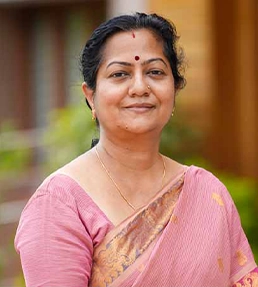
Message from the HOD
Bangalore Kengeri Campus
It is my great pleasure to welcome you to the Department of Civil Engineering. As we continue to navigate through an exciting era of innovation and growth in the field, our department remains committed to providing high-quality education, fostering research, and contributing to the development of sustainable infrastructure for the future. Our department is dedicated to equipping students with the skills and knowledge they need to excel in the dynamic world of civil engineering. Through a combination of theoretical learning, practical application, and hands-on experiences, our expert faculty prepare our graduates to become leaders in the field, solving complex challenges and making a positive impact o
Message from the HOD
It is my great pleasure to welcome you to the Department of Civil Engineering. As we continue to navigate through an exciting era of innovation and growth in the field, our department remains committed to providing high-quality education, fostering research, and contributing to the development of sustainable infrastructure for the future. Our department is dedicated to equipping students with the skills and knowledge they need to excel in the dynamic world of civil engineering. Through a combination of theoretical learning, practical application, and hands-on experiences, our expert faculty prepare our graduates to become leaders in the field, solving complex challenges and making a positive impact on society. Students are encouraged to associate with faculty on research projects, participate in student organizations and internships with industry collaborations.
Admission Process
- Register with your Email ID
- Login to the Admission Portal
- Fill the Application Form
- Pay Application Fee
- Entrance Test (If Applicable)
- Assessment
- Interview
- Check login page for result
- If selected, Offer Letter attached
- Pay Course Fee Online
- Complete Admission Process
Ready to Apply?
Applications are open. Deadline: 2026-11-25 23:45:00.